

Spring · Summer · Fall
Moose Spotting
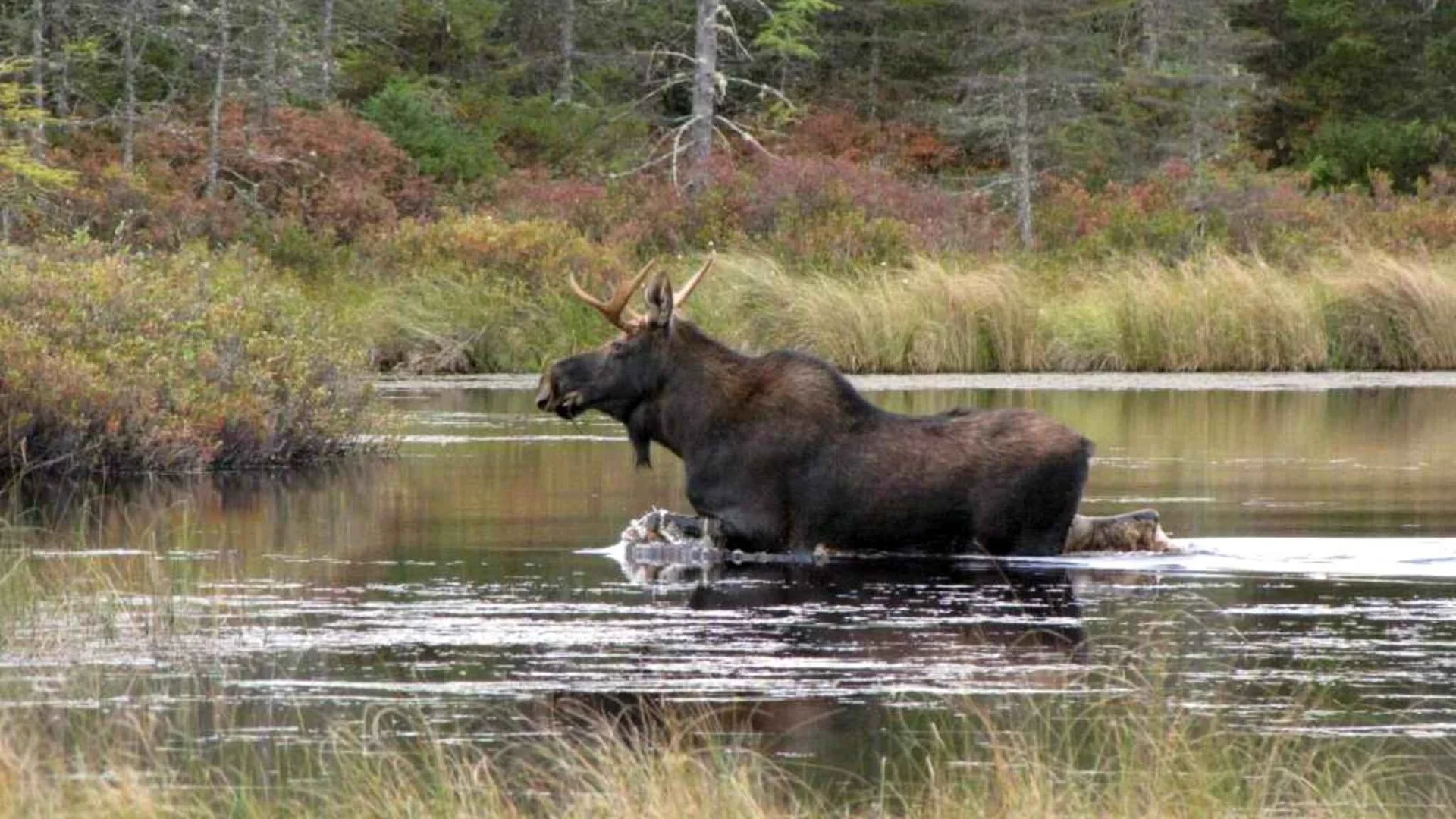
Greenville calls itself the moose capital of Maine for good reason. The state has the largest moose population in the lower 48, and the ponds, bogs and cut-over forest around Moosehead Lake are exactly the habitat they want. Most guests who go looking at the right hour, in the right month, on the right road see one; many see several. This guide gathers what the state biologists, the Maine Department of Transportation and the local guides say about when to go, where to look and how to keep both you and the moose safe.
One thing to keep in mind: a moose is a wild animal the size of a horse, and the same roads that make for easy viewing are where nearly every moose-and-car collision in Maine happens. Read the safety sections before you set the alarm for 4:30.
Why Moosehead is moose country
- Maine moose
- about 60,000–70,000 (MDIFW's last full estimate was 76,000)
- Bull weight
- up to 1,400 lb, 6 ft at the shoulder
- Local ratio
- locals say moose outnumber people three to one
- Festival
- Moose Mainea, mid-May to mid-June
Maine's state moose biologist, Lee Kantar, puts the herd at 60,000 to 70,000 animals, the largest in the contiguous United States; the department's last full aerial estimate was around 76,000. They concentrate in the working forest of the north and west, and the Moosehead region, with its thousands of acres of wetland edged by young regrowth, is the heart of it. National Geographic repeats the local line that around Moosehead Lake moose outnumber people three to one, and with Greenville's population under 2,000 and the surrounding townships nearly empty, it is easy to believe. Winter ticks have hit calves hard in recent years, so a gaunt, patchy "ghost moose" in spring is a sad sight but a normal one.
The town celebrates all this every year with Moose Mainea, a month-long festival from mid-May to mid-June with a moose photo contest, the Moose River Canoe Race, the Tour de Moose mountain-bike race, craft fairs and kids' days; see our local events page.
Sources: MDIFW: Moose · Down East: Maine's moose population · National Geographic · Destination Moosehead Lake
When to look: time of day and time of year
- Best hours
- the first two hours after dawn and the last two before dark
- Best months
- mid-May through July
- Second season
- late September to mid-October, the rut
- Winter
- along snowmobile trails; bulls drop antlers by January
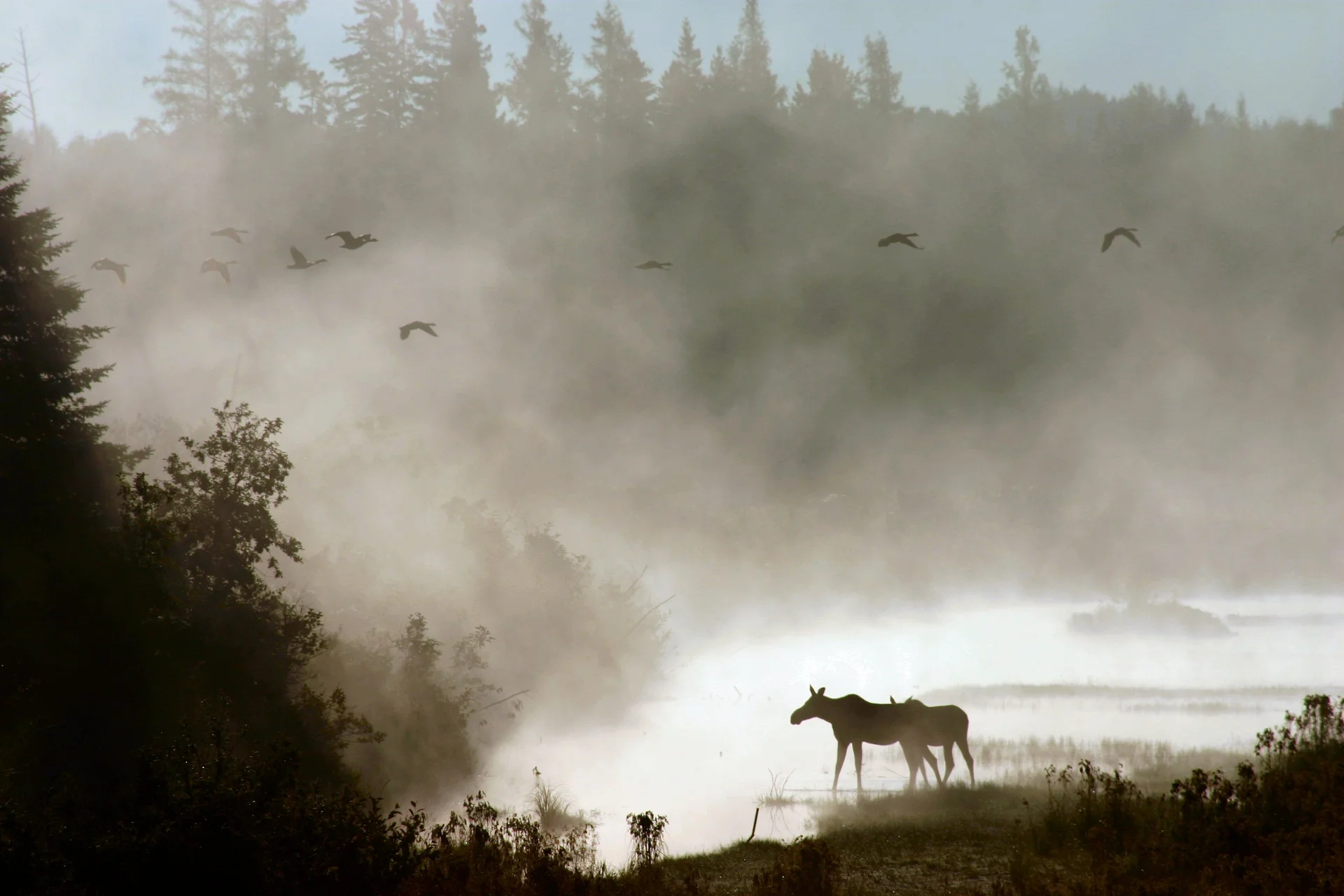
Dawn and dusk. MDIFW describes moose as "active mostly at dusk and dawn," and every guide in town runs tours from about 5 to 9 in the morning and 4 to 8 in the evening. Midday in summer is the worst time; moose overheat easily and bed down in shade.
Mid-May through July is prime. Natural salt licks are rare in Maine, so moose come to the roadsides to lap up winter road salt, and to ponds for sodium-rich water plants; they also stand in water to escape black flies. Cows have their calves in late May, and bulls are easy to see before the leaves thicken. MaineDOT calls May and June the peak months for moose collisions for exactly the same reason: the animals are on the road shoulders.
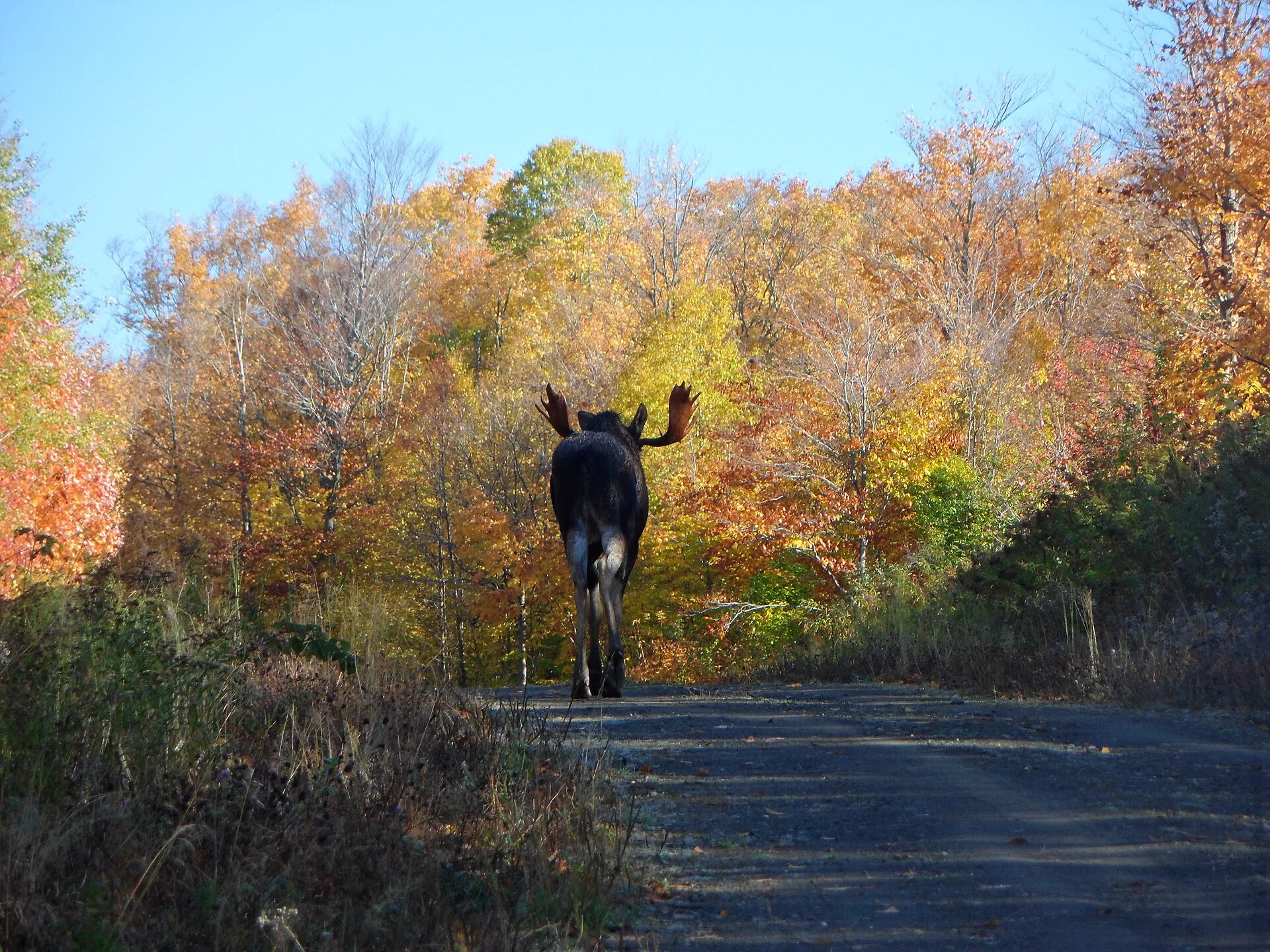
Late September into October is the second season. The rut sends bulls, now carrying full hard antlers, travelling widely and calling; sightings shift from the water to clear-cuts and road edges, which is why the fall tours go by van rather than canoe. Moose are also more aggressive now, so the distance rules below matter more.
Winter sightings are real but different: moose use packed snowmobile trails as corridors, so sledders often see them, and bulls have shed their antlers by midwinter. March and April are the lean months, when the animals are ticked, thin and best left alone.
Sources: MDIFW: Moose · MDIFW blog: Moose watching in Maine · Visit Maine: Moose watching · Northeast Whitewater: best time to see moose
Where to look near Greenville
The rule from the regional biologists is simple: wetlands next to young forest, close to a road that was salted in winter. These are the stretches that produce year after year, roughly in order of distance from King's Landing. Every one of them is pinned on the map below with directions.
- Route 15 south and Shirley Bog (10–15 min). The bog between the two Shirley turn-offs, and the pull-off by the MaineDOT maintenance shed on the west side of the highway, are named by the region's state biologist as one of the most reliable roadside spots; the salt-rich runoff draws moose all June.
- Prong Pond (10 min, off Lily Bay Road on Prong Pond Road). A quiet paddle-in pond with marshy edges, good at first light from a kayak.
- Lily Bay Road to Kokadjo, "moose alley" (18–20 mi, 25–30 min). Paved the whole way, moose-crossing signs the whole way, wetlands on both sides and the Lily Bay State Park turn at the halfway point. Drive it slowly at dawn with the windows down.
- Lazy Tom Bog, Kokadjo (about 35 min). The classic. From the Kokadjo bridge continue about 1.5 miles, keep left at the fork onto Spencer Bay Road, and in half a mile you reach the Lazy Tom Stream bridge with a broad wetland in view from the road. Park well off the road, switch the engine off, stay in the car and give it 15 quiet minutes. Best June and July at dawn, good again in September.
- First Roach Pond and the Kokadjo Trading Post (30 min). A 3,300-acre pond in a village with a population of about six; the trading post sells coffee and directions, and the Roach River outlet and the ponds beyond are all moose water.
- Route 6/15 north to Rockwood and the Moose River (20 mi, 30 min, then onward toward Jackman). The west-side "moose alley," past pond after pond; at Rockwood the Moose River flats are best seen by canoe, and The Birches runs pontoon moose cruises from its marina.
- Little Moose Public Reserved Land (10 min). Big Moose, Little Moose and the Notch Ponds sit inside 15,000 acres of state land with no road traffic at all; the state notes moose are often seen from the pond trails on our hiking guide.
- The Golden Road (1.5 hours plus). For a full-day expedition, take Lily Bay Road to Kokadjo, then the gravel Sias Hill road north to Ripogenus Dam and the 96-mile private logging highway toward Baxter. Full-size spare, high clearance, no cell service, and North Maine Woods fees at the checkpoints. The moose density is real, and so are the trucks.
Biologists also name Second West Branch Pond, Tomhegan Pond, Kidney Pond and Poland Pond among the region's productive water; ask a guide, or ask us, for the current hot spots.
Sources: Bangor Daily News: where to see moose · Piscataquis Observer: Kokadjo · Northwoods Sporting Journal: Region E spots · Maine Public Lands: Little Moose · North Maine Woods
Guided moose safaris
If you have one shot at it, book a guide. Registered Maine Guides scout the ponds daily, know which bog is producing this week, and take you by van, canoe or pontoon at the hours that work. Success rates above 90 percent are the norm in June and July. The operators below all run from Greenville, Shirley or Rockwood; phone numbers and directions are in the listings further down.
- Northwoods Outfitters, Greenville: private van and canoe safaris for up to 12, three to four hours, dawn and late-afternoon departures May through November; from about $350 per couple, confirm when booking.
- Young's Guide Service, Greenville: Chris Young, a Registered Maine Guide and champion moose caller, runs private 4×4 safaris for two at $450, June to early October.
- Northeast Whitewater, Shirley: guided canoe ($84) and van ($74) moose tours at 6 a.m. and late afternoon, May to mid-October, easily combined with a rafting day.
- The Birches Resort, Rockwood: pontoon moose cruises on the Moose River and Kineo shoreline, mornings from $50 and afternoons from $65, with a six-person minimum.
- Moosehead Area Guide Services and Special T Adventures, Greenville: private jeep, ATV and, in winter, snowmobile moose tours from about $350.
The Katahdin steamboat's "Moose Island" cruise is a scenic lake cruise, not a wildlife tour, so book a guide for the animals and the boat for the views.
Sources: Northwoods Outfitters moose tours · Young's Guide Service · Northeast Whitewater moose tours · The Birches moose cruises · Katahdin Cruises
Safety on foot
- Minimum distance
- 25 yards, and much more if the moose reacts
- Highest risk
- cows with calves in June; bulls in late September and October
- Warning signs
- ears back, hackles up on the hump, lip licking, a slow walk toward you
- If charged
- run and put a tree or car between you
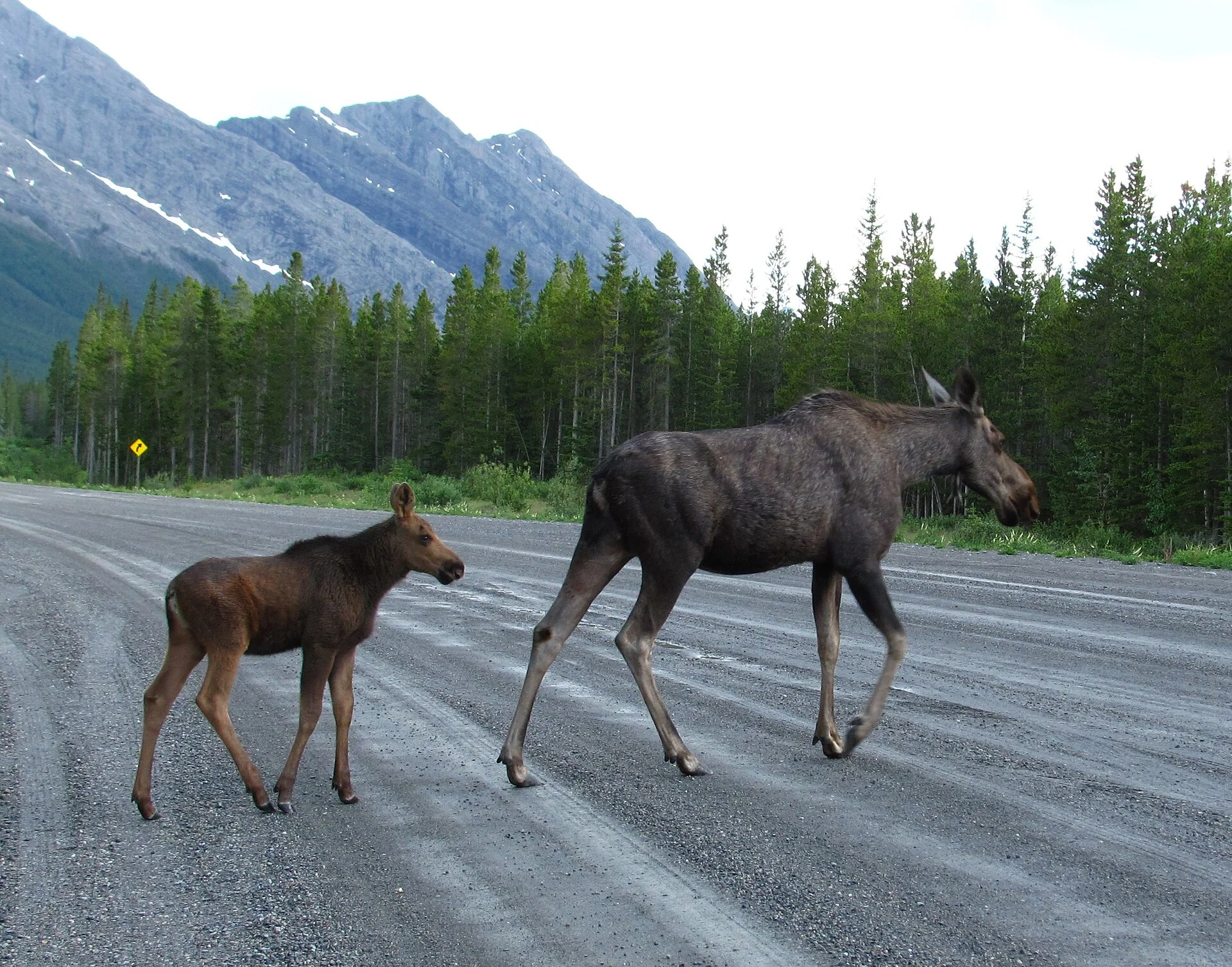
MDIFW's rule of thumb is that "the best compliment wildlife can give is if they don't react to your presence. If they do, you are too close." Moose injure more people in North America each year than bears do, almost always because someone walked up for a photograph. Keep at least 25 yards, roughly two bus lengths, and give a cow with a calf or a bull in the rut far more than that; never get between a cow and her calf, and never bring a dog close, since moose treat dogs as wolves.
Read the animal. Ears laid back, the long hairs on the hump standing up, lip licking, head tossing or a slow deliberate walk toward you all mean leave now. Unlike with a bear, running is the right answer: most charges are bluffs, and a moose will usually stop once you have a tree, a boulder or a vehicle between you. If you are knocked down, curl up, protect your head and stay still until it moves well away. Never feed a moose, and never try to call one in.
Sources: MDIFW: Moose · Northern Moose Alliance: safety and etiquette · Alaska Fish and Game: aggressive moose
Safety on the road
- Crashes at night
- 74% of Maine moose collisions
- Peak months
- May and June, more than a third of the year's crashes
- Peak hours
- 4–5 a.m. and 8–11 p.m.
- Average cost
- about $179,000 per moose crash
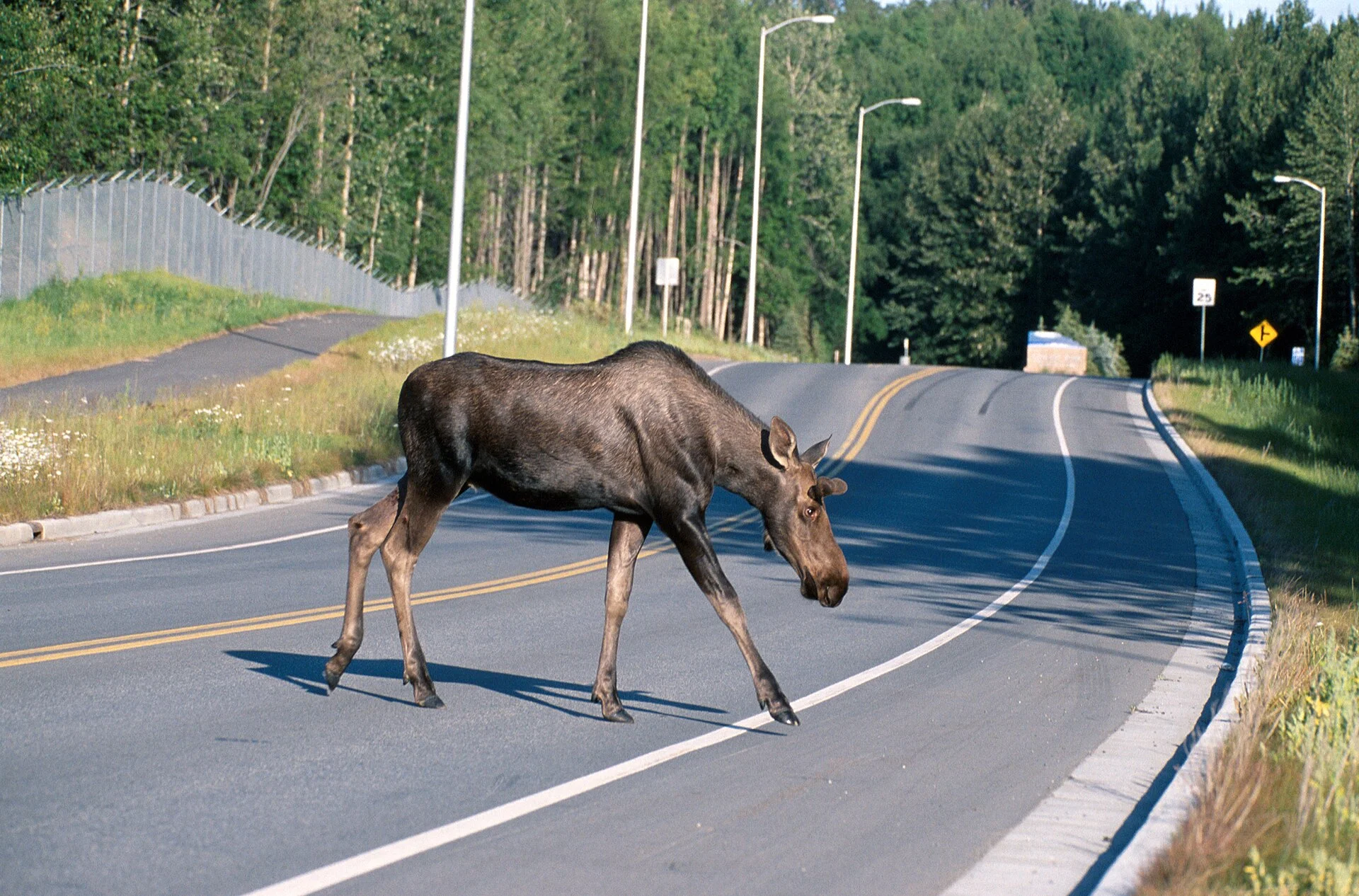
Nearly three in four moose collisions in Maine happen after dark, and the reason is physics: a moose's eyes sit so high that headlights never light them up, and a dark-brown animal standing broadside on a dark road is nearly invisible until it fills the windshield. MaineDOT's advice is to use high beams whenever you can, scan the shoulders rather than the road, slow well down at dawn, dusk and night from May through October, and never drive faster than you can stop within your lights. If a moose is in the road, stop and wait; do not swerve around it, and do not sound the horn. If a hit is unavoidable, brake hard, then let off just before impact so the nose lifts, and duck low, because the body of a 1,000-pound animal comes over the hood.
Logging roads are different rules. The Golden Road, the Kokadjo roads and every gravel road north of town are private working roads. Logging trucks have the right of way, full stop: pull right over and stop when you see one, keep under 45 mph, drive with your lights on, wait for the dust to clear before passing a truck's wake, and never park in the road or block a gate. Checkpoints of the North Maine Woods charge a day fee ($18 non-resident, $13 resident in 2026, cash or check) and close overnight. Ticks are thick in the same bogs the moose love, so use repellent, tuck pants into socks and check everyone at the end of the drive.
Sources: MaineDOT wildlife safety · Bangor Daily News: peak moose collision season (MaineDOT 2020–24 data) · North Maine Woods rules and fees · Maine CDC: ticks
Etiquette and photography
- Stay in the car. Moose tolerate vehicles far better than people on foot, and a car is your safest blind. Switch off the engine, keep voices down, and do not slam doors.
- Pull all the way off. Stopping in a travel lane on Lily Bay Road at dusk is how the next collision happens. Use pull-offs and let other cars pass.
- Do not feed, call or crowd. Feeding is illegal for good reason, calling apps and grunting during the rut invite a charge, and a ring of people or cars around one animal is harassment. Never surround or herd a moose for a photo.
- No drones. Baxter State Park bans them for disturbing wildlife, and buzzing a moose is the quickest way to end a sighting for everyone.
- Bring the long lens. A 300 mm lens or a good pair of binoculars turns a distant, relaxed moose into a full-frame photograph without moving a step. Dawn light off the bog is the picture you came for, and a bull's reflection in still water is worth the 4:30 alarm.
- Share the sighting. Text us or tell the guides; the whole town keeps informal tabs on where the moose are this week, and your tip helps the next guest.
Sources: Northern Moose Alliance · Visit Maine: All about moose, Greenville
Local resources
- Shirley Bog (Rt 15)Rt 15, ShirleyRoadside bog and MaineDOT shed pull-off, 10–15 minutes south; a biologist-recommended salt-lick stretch.
- Prong PondProng Pond Rd, GreenvilleQuiet marsh-edged pond off Lily Bay Road for a dawn paddle.
- Lily Bay Road to KokadjoLily Bay Rd, GreenvilleThe paved east-side moose alley, 18–20 miles of wetland and crossing signs; drive it slowly at dawn.
- Lazy Tom BogSpencer Bay Rd, KokadjoThe classic viewing wetland at the Lazy Tom Stream bridge, 1.5 miles past the Kokadjo bridge then left at the fork.
- Kokadjo Trading Post & First Roach PondLily Bay Rd, KokadjoCoffee, supplies and moose intel in a village of six; the Roach River outlet is moose water.
- Rockwood & the Moose RiverRockwoodWest-side moose alley on Route 6/15; the river flats are best by canoe or pontoon.
- Northwoods Outfitters5 Lily Bay Rd, Greenville(207) 695-3288Private van and canoe moose safaris, May to November; from about $350 per couple.
- Young's Guide Service25 Wilson View Dr, Greenville(207) 695-2661Private 4×4 moose safaris with a champion moose caller, June to early October.
- Northeast Whitewater155 Greenville Rd, Shirley(207) 695-0151Guided canoe and van moose tours at dawn and late afternoon, May to mid-October.
- The Birches Resort281 Birches Rd, Rockwood(207) 534-7305Pontoon moose cruises on the Moose River and past Kineo, mornings and afternoons.
- Special T Adventures451B Moosehead Lake Rd, Greenville(207) 280-0661Private jeep, ATV and snowmobile moose and wildlife tours.
- Moosehead Area Guide ServicesMaster Maine Guide Harold King; private moose tours from about $350, morning, afternoon and evening.
On the map
Last reviewed September 2026. Spot something out of date? Tell us. Header photo: Govtaski David, U.S. Fish and Wildlife Service, public domain.